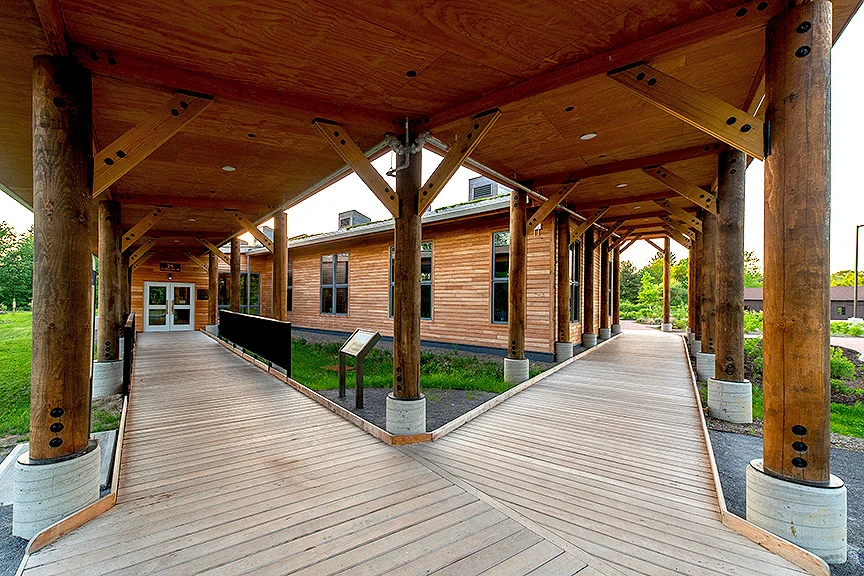
How long does a wood deck last? 10 to 50+ years, depending on species. Black Locust Lumber compares 7 materials by lifespan and cost.
How long does a wood deck last? Between 10 and 50+ years, and where you land comes down to three things: the species you build with, how well you keep up with it, and how wet the wood stays. Species is the biggest lever by far. Two decks can sit side by side in the same yard, get the same care, and be a full generation apart when it's time to tear one out.
Quick hello: we're Black Locust Lumber, a family-run sawmill and lumber supplier in Pennsylvania that's spent 25+ years working with a single species. Sourcing, milling, and finished decking all happen under one roof, and our boards sit on public boardwalks that take thousands of footsteps a day. We’ll tell you how long each species lasts, the failure points that actually end decks, and give you a straight answer on what you're buying.
Most wood decks get replaced between 10 and 30 years old. The ones that go longer aren't lucky. They're built from wood that fights decay on its own, like black locust, whose heartwood carries natural extractives that rot fungi and insects won't feed on.
The North American Deck and Railing Association estimates there are more than 60 million decks in the U.S., and roughly half of them are already past their useful life.
A deck usually looks fine right up until it fails, because the cause is hiding right where you're not looking. The Consumer Product Safety Commission recorded about 2,900 injuries and two deaths from deck, balcony, and porch collapses between 2016 and 2019.
Species is the primary driver, and the spread is enormous.
Black locust is the only material here pairing a mid-tier price with a top-tier lifespan. We publish our decking price list openly instead of making you ask, and milling is included, so eased edges, S4S, and hidden-fastener grooves carry no upcharge. Check whether your other quotes do the same.
That lifespan claim isn't ours to make, though, so here's who makes it. The USDA Forest Products Laboratory rates decay resistance species by species, and black locust lands in the top category, "very resistant," alongside ipe. A USDA Forest Service sheet on the species calls it "extremely durable." We didn't write either one.
One heads-up before you lean on that table: Old-growth redwood really is very resistant. The young-growth redwood you can buy today? Only moderately resistant. Same name on the label, different wood on your deck.
Be skeptical of anyone handing you exact lifespans by region. Numbers that precise don't exist. What is predictable is the direction, and it all comes down to how long your boards stay wet:
Want this against your own shortlist? Our side-by-side decking comparison scores five materials across seven criteria.
This one quietly matters more than skipped maintenance, and it almost never gets checked.
Pressure-treated lumber isn't one thing. The American Wood Protection Association sorts it into use categories: UC3B for outdoor use above the ground, and UC4A for wood that sits in soil or fresh water. Think rain boots versus running shoes. Both work outside, but only one can stand in a puddle.
Put UC3B where UC4A belongs, like on a post base or a joist near grade, and congratulations: you've turned a 25-year deck into a 10-year one. The rating's printed on the tag stapled to the board, so go look before anything gets installed.
Naturally durable species can skip treatment altogether, with one catch: The American Wood Council's deck construction guide asks that heartwood make up 90% or more of each board's face. Sapwood rots no matter which tree it came from.
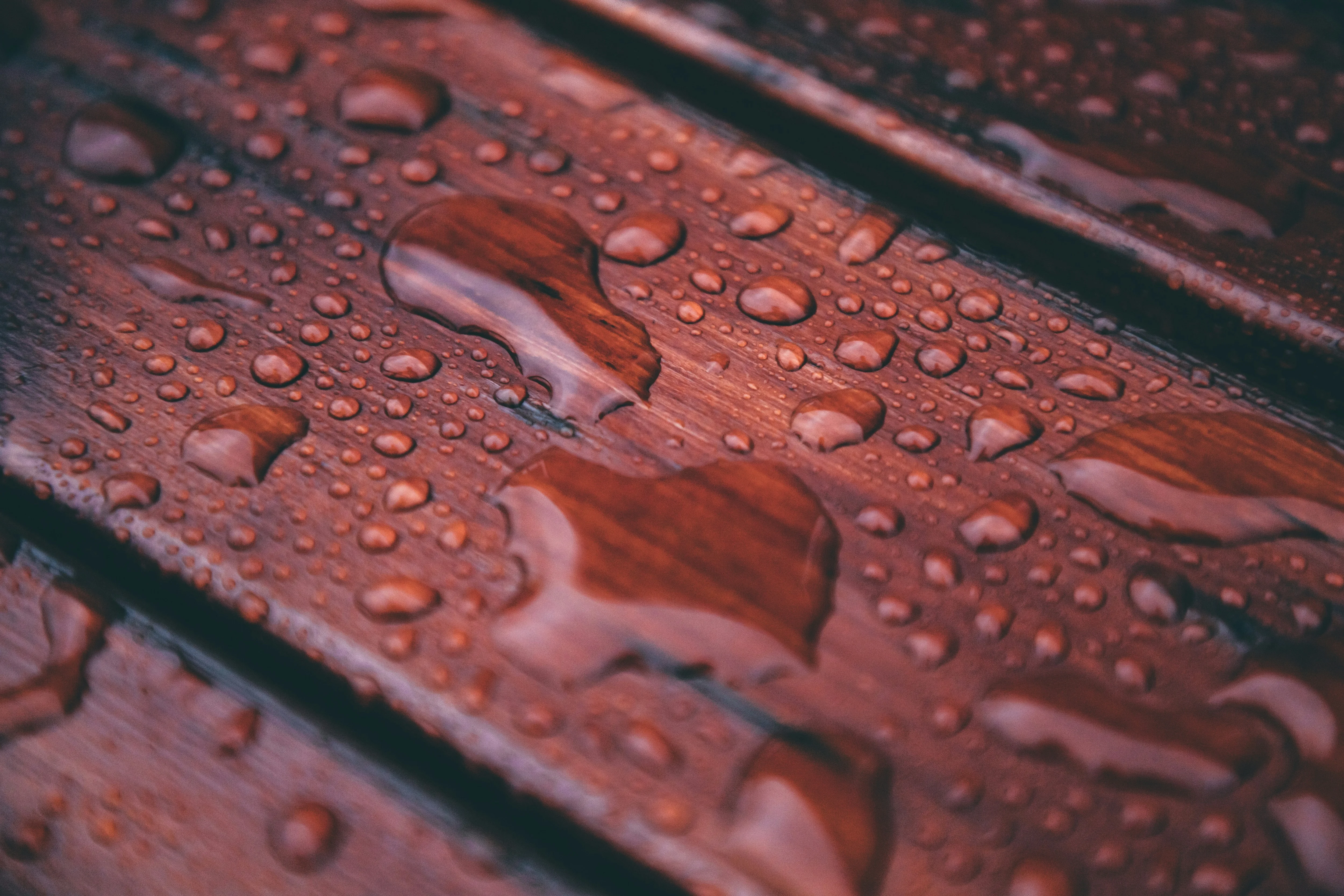
Rot needs water to grow and flourish, making it the biggest issue facing wooden decks.
The Forest Products Laboratory puts a number on it: serious decay can't start until wood moisture passes the fiber saturation point (around 30%). Keep boards air-dried and under roughly 20%, and rot has nothing to work with.
So here's what to watch for. Every one of these leaves water sitting where it shouldn't:
That last one's the fork in the road. A deck that depends on a coating is only as durable as your follow-through, and life gets busy. Black locust carries its defenses in the heartwood instead, so there's nothing to keep up with. Our black locust lifespan breakdown explains how that works.
A deck isn't just about the wood on top. Almost every lifespan number treats a deck as one object, but it's really three systems on three different clocks:
Surface boards take the sun, rain, and traffic. First thing you notice, often the last thing to actually fail.
The framing (posts, beams, joists, and the ledger where the deck meets the house) sits in shade and stays damp longer. The ledger is the most common structural failure point on a residential deck.
Fasteners and hardware corrode, especially when the wrong metal meets modern treated lumber. Hardware regularly gives out before the wood around it does.
Grab a screwdriver and go:
Anything soft or moving means bring in a pro. Everything else is maintenance.
Depends entirely on what you started with. Pressure-treated pine can reach 30 years, but only with maintenance you never skip, and that's not always realistic. A naturally durable species gets there without the discipline. You can see exactly where the two split if you want it year by year.
What actually moves the needle:
With black locust, our advice is to skip the oil and let the wood weather on its own.
Knowing what's normal keeps you from mistaking weathering for failure.
Years 1 to 5: Everything grays and shows light checking as UV breaks down lignin. With black locust, the change is purely cosmetic. Over time, it turns silvery gray. That's patina, not decay, and you can let it happen or keep the color on purpose.
Years 5 to 10. Durability starts showing. Treated pine begins failing at posts and ledger connections in wet climates. Tougher species stay untouched.
Years 10 to 20. Decision time for treated softwood. Cedar usually needs boards swapped. Ipe and black locust are still working.
Years 20+. Most treated softwood decks are done, but durable hardwoods, like black locust, are often still going. Our boards went down on the Coney Island Boardwalk in 2016 and are still in service today.
Where the damage sits matters more than how much there is.
Repair when: rot is under 20% of surface boards, framing is sound, fasteners are rusty but solid, or the finish faded while the wood stays firm.
Replace when: rot reaches posts, beams, or joists; boards feel spongy; the ledger is compromised; the deck moves underfoot; or repairs approach half of replacement cost.
Species choice decides how soon you'll do this again. Our black locust decking carries a 50-year limited warranty above ground, and 25 years for ground contact and marine use, because constant soil moisture is hard on any wood.

Treated pine left alone usually shows structural trouble by year 8 to 12, since its protection is a coating you're not reapplying. Black locust, on the other hand, needs no sealing, no oiling, no annual ritual. It silvers over and keeps holding, which is why it suits public boardwalks and municipal projects where yearly sealing was never part of the plan.
Sometimes, and it's worth checking before you demo anything. If posts, beams, joists, and ledger pass inspection and meet code, re-decking can cut the job cost a lot. Get the framing evaluated first. New boards on a tired frame are money spent on a deck that still fails.
Not automatically. A warranty covers specific defects under specific conditions, but it’s not a promise of service life. Read what's covered, what's excluded, and whether the term changes by application. Ours does, and any honest one will.
Usually hardwood. Cheap boards, plus sealing every 18 months, plus replacement around year 15, often totals more than a hardwood deck still standing at year 30. Divide by years of service, not sticker price.
Everything above comes back to one decision: what you build with. That's an easier call to make alongside people who work with one species all day.
Talk to us about your project, the climate it lives in, and how long it needs to last, and we'll give you a straight read. At Black Locust Lumber, we stay with it the whole way: working out the spec, milling to it, sending progress photos, coordinating freight to your site, and checking back in once you've lived with the deck a while.
Continue Reading

The Best Wood for Decks: A Guide to Outdoor Decking

Outdoor Flooring Options Compared by Cost and Lifespan
The Domestic Teak Alternative for Decking: Black Locust

Wood Siding: Types, Cost, Lifespan, and What Actually Lasts