
Willem Warmbold
Compare top deck wood alternatives to Black Locust Lumber's hardwood decking and siding, made in Pennsylvania for the US and Canada. Request a free sample today
Deck wood alternatives split into five real categories: composite, PVC or vinyl, aluminum, tropical hardwood, and black locust. The right one depends on your climate, your budget, and how much upkeep you want to do each spring. Black Locust Lumber mills black locust decking that lasts decades without a stain, sealant, or any chemical treatment, a different category from the options below. This guide compares what each material actually costs over the life of a deck, not just at checkout.

Here is how the main options stack up before the details on each one.
Prices shift with region and supplier, but the pattern holds: low upkeep usually costs more up front, except black locust, which sits mid-range and still needs almost nothing done to it.
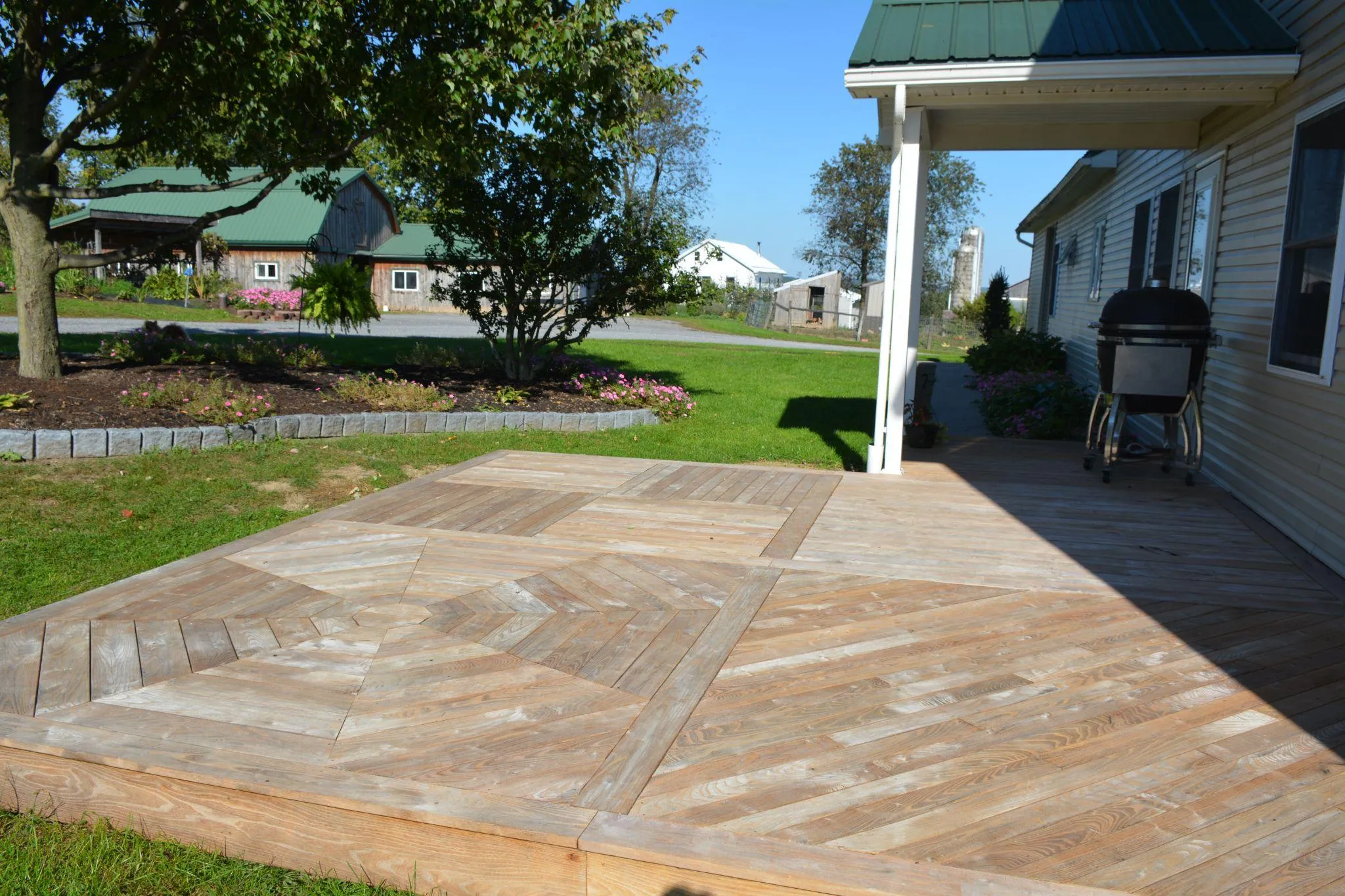
Wood rots because fungi feed on it, and fungi need moisture to survive. Any board left outdoors gets wet sooner or later, so the real question is whether the wood can defend itself. Ordinary softwood cannot. Pine, spruce, and fir have no natural defense, which is why pressure-treated lumber exists: chemical preservatives are forced in so fungi are poisoned rather than the wood being naturally resistant.
That gap between species is well documented. The USDA Forest Products Laboratory classifies American wood species by heartwood decay resistance, and the difference is stark. Fence posts from a non-resistant species can rot through in five years or less, while posts from an exceptionally resistant species can hold up for twenty years or more untreated. Most decking alternatives close that gap artificially, through chemicals, plastic, or a factory heat process. Black locust closes it because of what the tree already is.
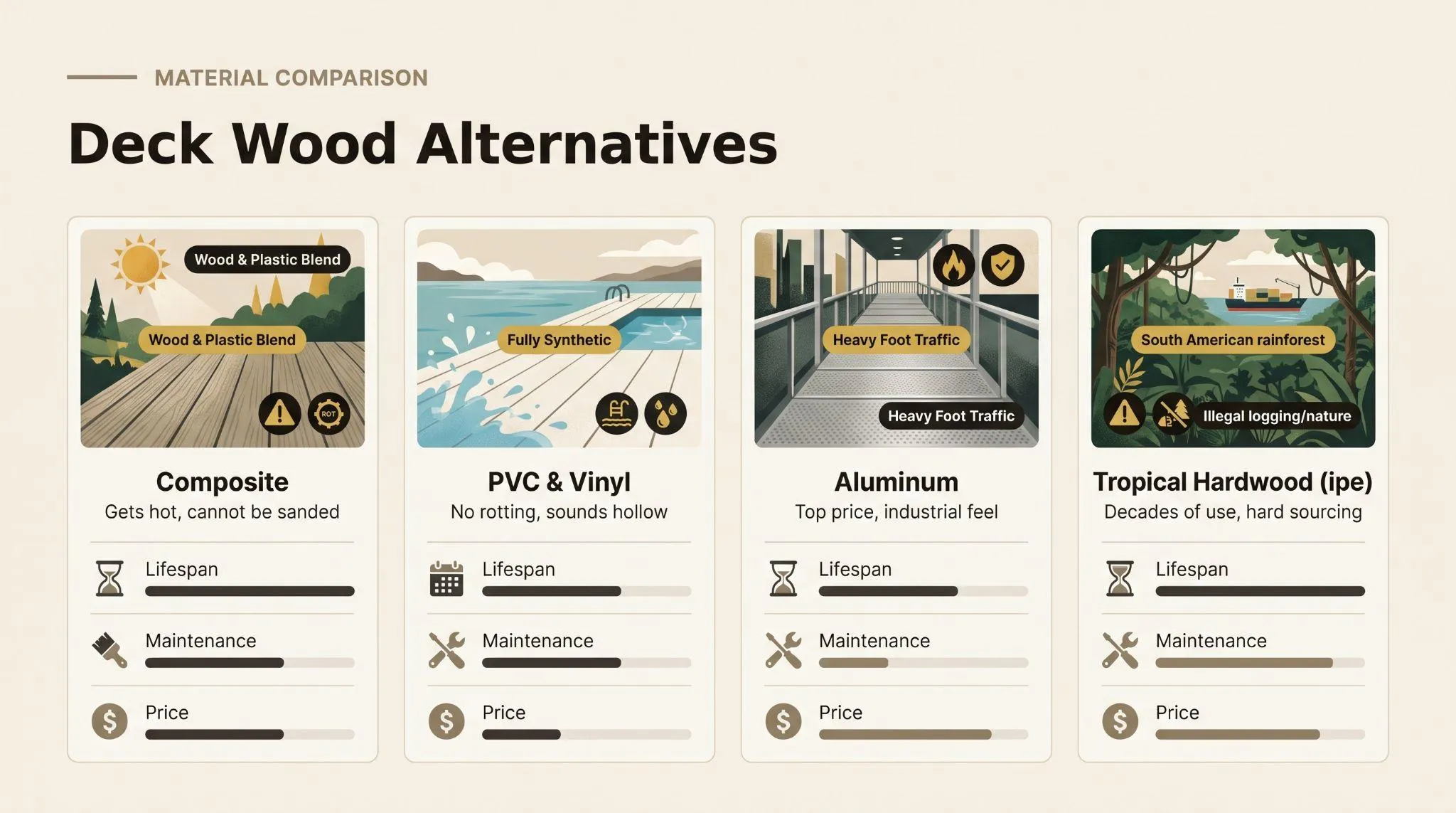
Composite blends wood fiber with plastic and has become the default pick for homeowners who want to stop staining and sealing a deck every year or two. It resists rot because there is little real wood left in it to rot, with long warranties behind most brands.
The trade-offs show up in daily use. Composite gets noticeably hot in direct sun, and it cannot be sanded, stained, or repaired, so a deep scratch is there for good. Its environmental footprint depends heavily on brand and recycled content.
PVC and vinyl skip wood fiber altogether. The boards are fully synthetic, so they will not rot, splinter, or absorb water no matter how wet or shaded the spot is, a strong fit for pool decks and coastal properties.
The downside is how it feels. PVC can sound and feel hollow underfoot, and it is fully petroleum-based, so buyers wanting a natural material will look elsewhere. It also runs pricier once railing and trim are added.
Aluminum is the material most people forget to compare, but it belongs on this list. It will not rot, warp, splinter, or burn, and it holds up under heavy foot traffic better than almost anything else here, so it shows up more on commercial walkways than backyard decks.
The catch is cost and feel. Aluminum runs at the top of the price range, gets slippery when wet without a textured finish, and reads as industrial rather than warm, ruling it out for many residential projects.
Ipe is the wood most people picture first when they think of a premium deck: dense, naturally rot-resistant, and known for lasting decades with little maintenance. It has long been the default answer for the best hardwood deck money could buy.
The trade-off is where it comes from. Ipe grows in South American rainforests and takes centuries to reach usable size, so every board crosses an ocean to reach a job site, and the trade has real, documented problems with illegal logging. We have written a full black locust versus ipe comparison if you want the complete breakdown, but the short version is that black locust gives you the same hardness and rot resistance, grown here instead of shipped from a rainforest.

Black locust is a dense North American hardwood that is naturally rot- and insect-resistant on its own, without a stain, bake cycle, or a drop of chemical preservative. The one exception is a natural sealant brushed onto the cut ends of fresh boards, which stops them from cracking as they dry and isn't a surface coating. We back every board with a 50-year rot resistance warranty, untreated, because the wood does the work itself. Left outdoors, it ages from its natural gold tone to a soft silver gray, a surface change, not decay.
Every board starts in the Appalachian Mountains, where our team works directly with local landowners and forestry networks rather than importing from overseas, and every order can be placed through our online lumber store. We also mill the same material into black locust siding, so the rot resistance that holds a deck board also holds an exterior wall. It has been specified on a Fallingwater project with an AIA Pennsylvania design award, on LEED Platinum certified buildings, and on corporate campuses for companies like Meta and NVIDIA. Think of it like buying from a farmers market instead of produce flown in from across the world: same quality, grown closer to home, with a story you can trace.
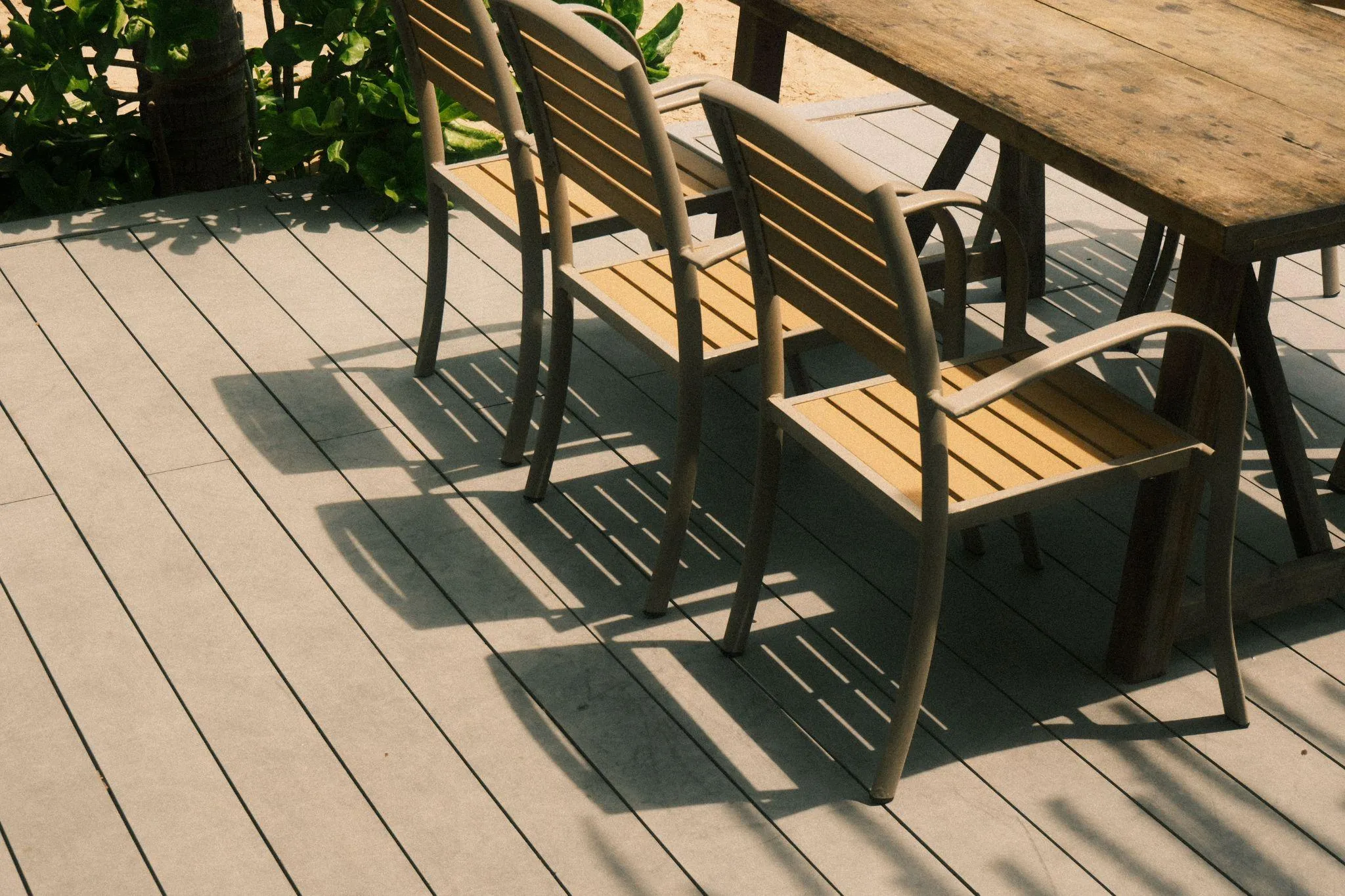
A homeowner in a wet coastal climate recently described a familiar problem online. A painted wood deck had been pressure washed, the paint chipped, and mushrooms were growing where moisture had gotten in behind the coating, a common failure point worth explaining.
A painted or coated deck does not get its rot resistance from the wood itself. It gets it from an unbroken film on top of the wood. The moment that film cracks or lets water in at a seam, moisture gets trapped underneath with nowhere to evaporate, and trapped moisture is exactly what fungi need. The board under the paint was never actually rot-resistant. It was just covered up.
That is the real difference between a coated deck and black locust. There is no film to maintain, because nothing is being covered up. The rot resistance comes from compounds already inside the wood, so there is no coating that can crack, peel, or trap moisture against the board. If you are in a wet or coastal climate and tired of repainting, that is why a naturally rot-resistant hardwood behaves differently than a coated one, whether the coating is paint, a composite cap, or a sealant.

Materials priced cheap per square foot are often not cheap over the life of a deck.
A pressure-treated deck typically needs replacing within eight to fifteen years, and each replacement adds demolition and disposal cost on top of the sealing already paid for. Black locust is built to outlast that cycle, which is why we treat it as a long-term maintenance budget decision rather than a one-time materials price, especially for commercial and institutional buyers planning thirty years ahead. You can see that approach across our project portfolio, which includes LEED Platinum and Living Building Challenge certified buildings still standing on the same boards decades later.

Climate narrows the list faster than anything else.
Once narrowed by climate, the deciding factor is how long you want to think about this deck. If you want the lowest sticker price and do not mind replacing it twice, pressure-treated pine still works. If you want a natural hardwood you install once and never touch again, order a black locust decking sample and compare the grain, color, and weight against anything else you are considering.
Black locust, aluminum, and high-end composite are the most durable options. Black locust lasts 50 or more years without chemical treatment, aluminum will not rot or warp, and premium composite brands carry warranties up to 50 years.
PVC, aluminum, and black locust all perform well in constant moisture. PVC and aluminum resist water because they are fully synthetic. Black locust resists it because the wood itself is naturally rot resistant, with no coating to fail.
Yes. Black Locust Lumber serves projects across the United States, with lumber cut and milled in the Appalachian Mountains of Pennsylvania.
No surface treatment is needed. Black locust is naturally rot- and insect-resistant without chemical treatment or stain, aside from a natural sealant brushed onto the cut ends of fresh boards to stop them from cracking as they dry. Every board ships with a 50-year rot resistance warranty, untreated.
Continue Reading

Luxury Decking Materials: What High-End Decks Are Built From

Natural Wood Deck or Composite? What Each Actually Costs
Black Locust vs Honey Locust: Key Differences Explained
How Long Does a Wood Deck Last? 10 to 50 Years, by Species


