Willem Warmbold
Black locust and honey locust trees are frequently confused, and to be honest, the confusion is understandable.
Multiple areas of the United States are home to both trees. They are both members of the legume family. They are both covered in thorns. They sound closely related, even by their names.
However, after investing some time with the two trees, you can clearly notice how they differ from one another. The thorns change their shape, the blooms have a distinct appearance, and the bark ages in distinct ways. Furthermore, when the trees are later turned into lumber, the result mismatch becomes much more visible.
For homeowners and property owners trying to determine different types of locust trees, these details matter more than most online guides suggest.
Most people notice the thorns before anything else.
Black locust thorns are small and paired. They grow where the leaf meets the branch, usually in short, stiff points. You will definitely feel them if you grab a young branch carelessly, but compared to honey locust, they are fairly restrained.
Honey locust is a completely different experience. Its thorns grow directly from the trunk and major limbs, often in thick, branched clusters that can reach up to 12 inches long. Older trees sometimes look almost armored. The trunk can appear covered in dark spikes growing in every direction.
This is where one of the most common questions arises: Are honey locust thorns poisonous? The answer is no. That is the only risk, physical injury, not poisoning.
It is important to know that some locust species have additional hazardous properties. For example, black locust leaves, bark, and seed pods can all be poisonous if consumed. Therefore, it takes vital care for families when they are around it.
If you are standing in front of a tree and wondering, “Does a locust tree have thorns?” The answer is yes for both species. The real difference is how those thorns grow. Small paired thorns along branches usually point to black locust. Large, branched spikes covering the trunk usually mean honey locust.
Once spring arrives, you can easily see the difference between these two trees.
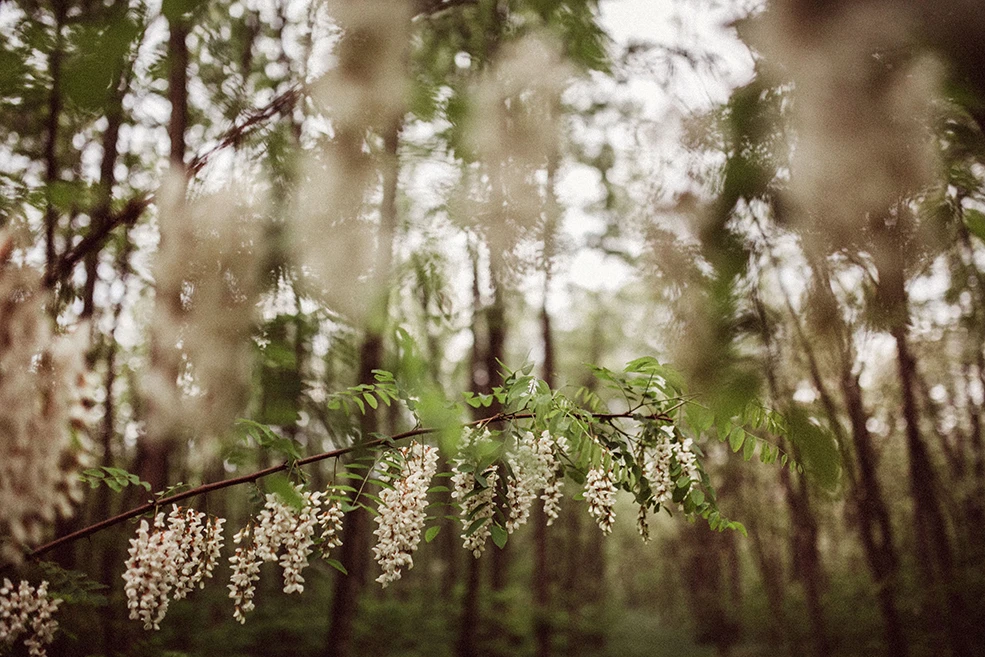
Hanging clusters of white blooms that are instantly noticeable are produced by black locusts. They are unexpectedly noticeable from a distance, bright, and aromatic. Mature black locust trees particularly stand out throughout the blooming season. In certain places, you may fragrance the flowers even before you see the tree.
Even less striking are the blossoms of honey locusts. They are often missed if you are specifically searching for them because of their tiny size and greenish-yellow hue. The flowers of a honey locust would go unnoticed by most people.
This is one reason so many homeowners work with honey locust vs black locust identification online. Even though the blossoms are one of the most noticeable visual distinctions between the two trees, the majority of publications concentrate primarily on the leaves and ignore the flowers entirely. You are most likely seeing black locust if the tree is covered in clusters of aromatic white flowers.
Both trees' bark begins to reveal a unique difference as they grow.
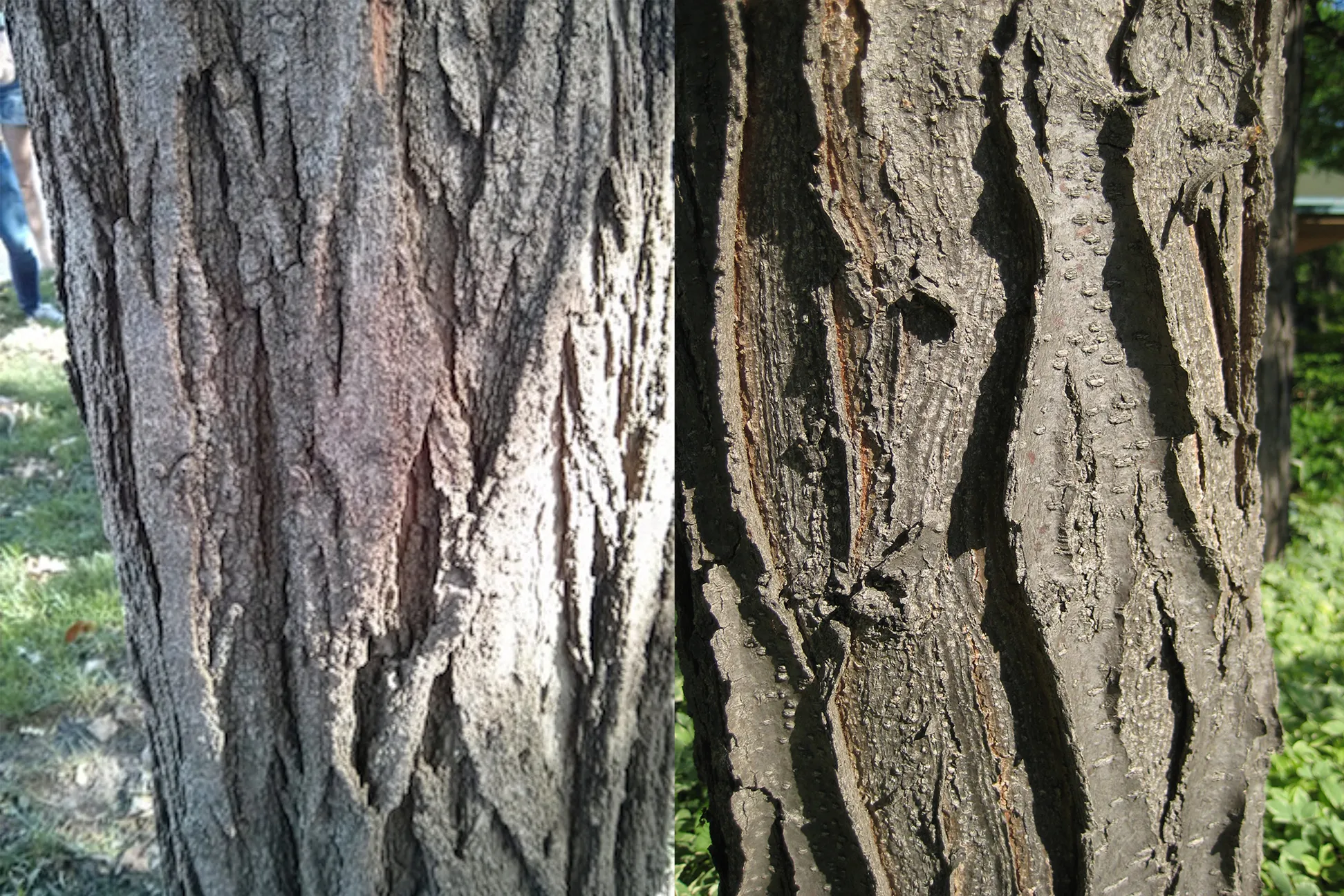
Black locust bark becomes deeply furrowed, rope‑like, and braided as the tree ages, giving older trunks a rugged, interwoven texture that stands out even from a distance.
Honey locust bark, by contrast, stays relatively flat and smooth, developing long, narrow plates that run vertically along the trunk without the heavy ridges or braided pattern of mature black locust.
This becomes one of the simplest methods to distinguish between the species in the winter. When there are no leaves or blooms, the texture of the bark is usually visible.
People who work around hardwoods regularly can often identify mature black locust from the bark alone.
The true distinction between honey locust and black locust is revealed once the wood is subjected to weather and time; the trees' appearance is important for identification.
Black locust is one of the most demanding natural hardwoods in North America, with a Janka hardness of around 1,700 lbf. Appropriately selected black locust heartwood may endure for decades outdoors without chemical treatment because of its high density, which directly contributes to its extraordinary natural rot resistance.
Black locust has gained such a solid reputation in the outdoors because of its inherent endurance. Black locust heartwood that is properly harvested has the greatest natural toughness grade, Class 1 durable. Depending on the surroundings, the wood can endure anywhere from 25 to over 100 years in ground-contact situations.
The tree itself is responsible for that performance. It is not produced by preservatives or pressure treatment.
The behavior of honey locusts changes dramatically when they are exposed to dampness and the outdoors. The wood does not provide the same degree of natural decay resistance, but it can still be utilized for some woodworking tasks. The two species' differences in external environments become increasingly evident over time.
Because of this, black locust has been utilized for many generations in harsh outdoor settings. Black locust was known to survive outdoors for decades before contemporary treated timber became prevalent.
Old black locust fence posts that were put in place a long time ago can still be discovered standing in various regions of Europe and the eastern United States. The same characteristics that aid in the tree's natural survival also contribute to the lumber's high value after harvest.
Once you understand how black locust grows, its lasting value as a lumber becomes obvious. The same toughness and natural rot resistance that let it survive harsh conditions for decades translate directly into long lasting outdoor wood. Its dense, class 1 durable heartwood weather chemical treatment, which is why it has been relied on for fence posts, marine pilings, and exposed structure elements for generations.
In contrast, honey locust has a very different durability profile, and its woods behave quite differently in ground conditions and wet environments. That’s what makes black locust not just another locust tree, but one of the most naturally durable hardwoods in North America for permanent outdoor use.
Among the different types of locust trees found across North America, black locust and honey locust are the two most commonly confused. To know more about these differences, or if you have questions about the project or need sources of data, feel free to contact at Black Locust Lumber.
How can honey locusts be distinguished from black locusts?
A honey locust can be distinguished from a black locust by its thorns, blossoms, and bark. Honey locust trees have large, spreading thorns from the trunk, while black locust trees have paired small thorns on the branches. The black locust has beautiful white blossoms as well as hard rope-like bark.
What makes black locust different from other hardwood species?
Black locust has exceptional resistance to natural decay with high toughness. With a Janka hardness value of over 1,700 lbf, it is among the strongest and most durable hardwoods in North America.
For what reason is black locust wood thought to be durable?
Black locust wood is naturally resistant to rot, moisture, and degradation. Its Class 1 hardness rating allows it to endure for decades outside without the need for chemical processing.
Does a locust tree have thorns all around its trunk?
Many do. Honey locust trees frequently have large, branching thorns that sprout directly from the trunk and major limbs. Black locusts frequently develop smaller paired thorns on younger branches.
Continue Reading

The Best Wood for Decks: A Guide to Outdoor Decking

Outdoor Flooring Options Compared by Cost and Lifespan
The Domestic Teak Alternative for Decking: Black Locust

Wood Siding: Types, Cost, Lifespan, and What Actually Lasts