Willem Warmbold
Comparing teak alternatives? See how black locust beats teak on hardness and USDA decay ratings, with no import paperwork or sanctions risk.
The strongest teak alternative for outdoor decking and siding is black locust, a North American hardwood that's harder than teak, sits in the U.S. Forest Service's top decay-resistance group, and comes out of Appalachia instead of Southeast Asia. Teak earned its reputation honestly. The problem is that the teak most buyers can actually get today isn't the teak that earned it.
We're Black Locust Lumber, a second-generation family sawmill and lumber supplier in Pennsylvania that mills everything we sell, and we've worked with one species for more than 25 years. This guide covers why teak got difficult and where black locust wins on federal durability data rather than on our say-so. It also names the two jobs we'd tell you to buy something else for.
Three things push people off teak, and price is usually the last of them.
The first is legal exposure. Nearly all export-grade Burmese teak moves through one state-owned seller, and the U.S. Treasury sanctioned that enterprise in 2021, which blocks transactions involving it for U.S. buyers. The Lacey Act separately requires importers to show due care that timber was legally harvested. That's why the Justice Department announced in 2026 that a luxury yacht builder pleaded guilty to Lacey Act violations over Burmese teak parts.
The second is supply. Teak grows naturally in only four countries, and the FAO's global assessment found that natural teak forests are shrinking while the quality of naturally grown teak declines. Plantations filled the volume gap, but volume and durability aren't the same thing.
The third is lead time, since documentation and ocean freight each add weeks a schedule has to absorb.
Here's the fact that reframes this comparison, and it isn't ours. The USDA Forest Products Laboratory's Wood Handbook groups species by average heartwood decay resistance, and teak appears in that table twice. Old-growth teak is listed as very resistant, the top group. Young-growth teak is listed two groups down, as only moderately resistant. Same species, same name on the invoice, two genuinely different materials. Black locust appears once, in the very resistant group, with no second listing.
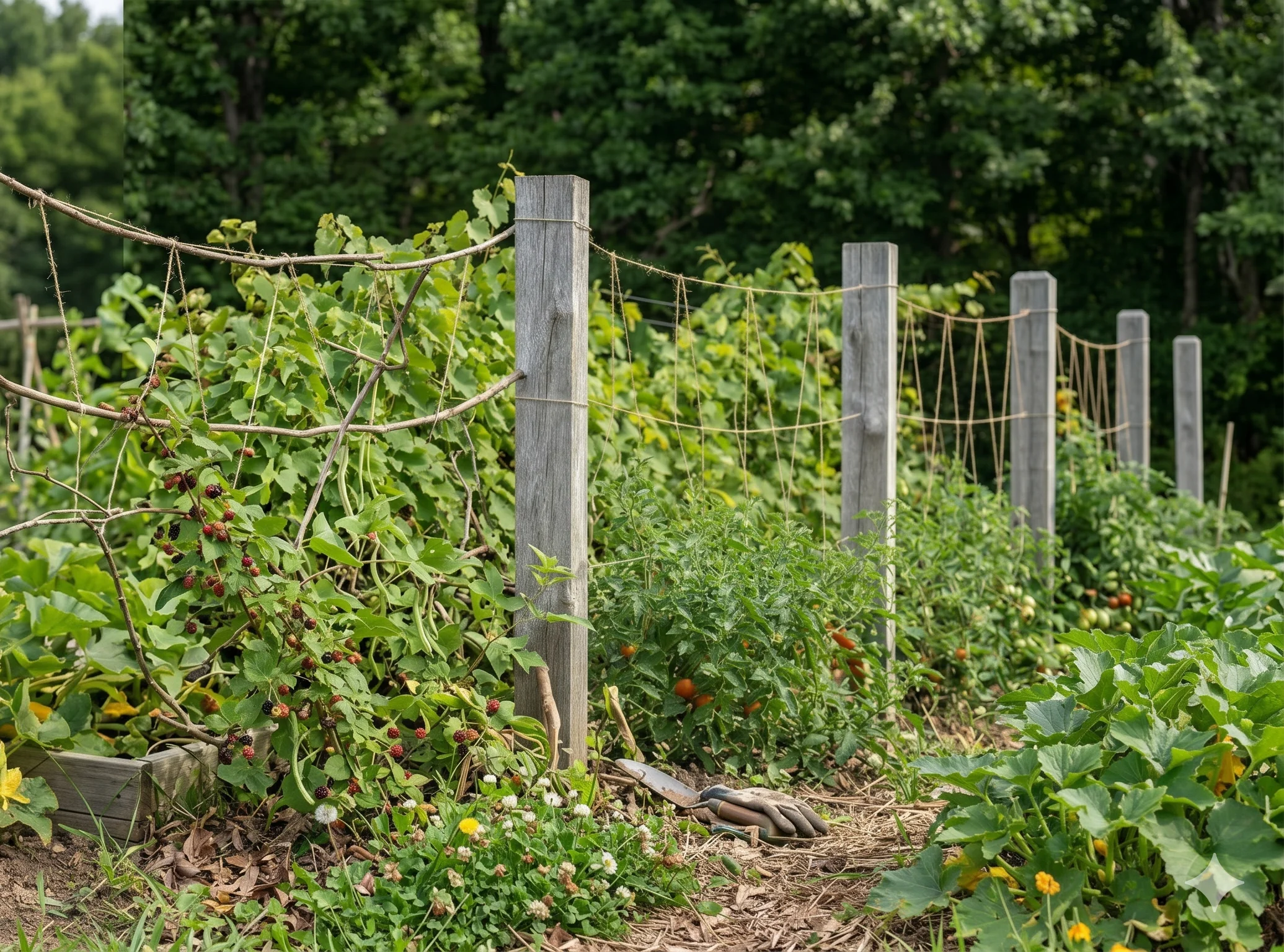
A study in NC State's BioResources comparing plantation teak at 5, 10, 15, and 20 years explains the split. Decay resistance tracks the protective extractives a tree lays down over decades, and younger wood hasn't built up as much of them. Most teak sold today is harvested young, because the old-growth forests behind the benchmark material aren't being logged at scale anymore.
Black locust doesn't have that problem. Purdue's New Crop program notes that its heartwood carries flavonoid concentrations around 6% of dry weight, mainly robinetin and dihydrorobinetin, and that posts built from it have stood in soil for over a century.
Buyers sort their options into three buckets.
Synthetic and composite systems copy teak's look and remove refinishing, but they run hotter underfoot, can't be sanded back, and aren't wood.
Engineered and modified woods build durability into a fast-growing timber in a factory. We put one of the best-known examples head to head with black locust here.
Naturally durable domestic hardwoods are the bucket most buyers skip, and the only one giving you real wood with no treatment, no modification, and no import paperwork.
Black locust is our whole business, so weigh the enthusiasm accordingly and check the sources yourself.
The Forest Products Laboratory's species sheet for Robinia pseudoacacia puts dry Janka side hardness at 1,700 lbf, calls the wood extremely durable, and ranks it among the hardest in America. Teak's published dry hardness runs roughly 1,000 to 1,155 lbf.
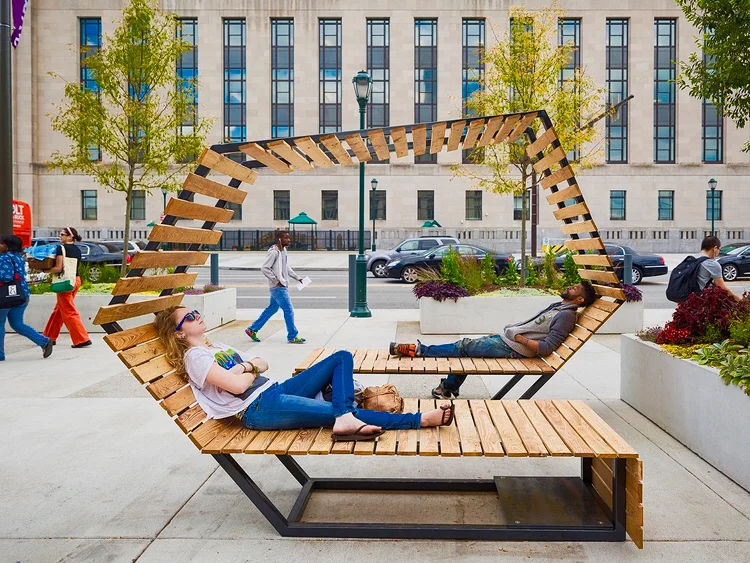
We'd rather point at real installations than adjectives. Our decking and boardwalks went into The BodyHoliday resort in St. Lucia in 2014, which is now more than a decade of Caribbean salt air, the exact conditions teak usually gets specified for. The boardwalk at Meta's Menlo Park campus and the site furnishings along Toronto's Harbourfront are ours too, and nobody is out there oiling any of it every spring.
The two woods also age toward the same place. Fresh-milled black locust runs golden to olive and weathers to silvery gray, which is exactly what untreated teak does, so a partial replacement gets easier to live with rather than harder. Our decking comparison page scores it against ipe, cedar, composite, and treated pine.
Two of those rows get misreported constantly. Neither wood needs chemical treatment, and neither needs maintenance to stay structurally sound. On both species, upkeep buys color rather than years.
Submerged marine structures. The Wood Handbook is blunt that no commercially important U.S. wood resists marine borers well enough to be used untreated where those organisms are active. Below the waterline, you want a treated product or a species like greenheart or azobe.
Wide, perfectly matched boards. Black locust trees are smaller than plantation teak, so we deliver random lengths and can't promise a long run of identical wide stock. If your design needs uniform 16-foot boards, tell us early.
One more caveat you should hear from us. Black locust is native to the Appalachians and the Ozarks, and outside that range it spreads aggressively enough that several states manage it as a noxious weed. Buying milled lumber isn't the same as planting a tree, but we won't pretend it's welcome everywhere.
Black locust lands well below teak per square foot and sits closer to redwood than to the tropical hardwoods, which routinely clear $55 per square foot installed. We publish our price list openly, and milling is included, so eased edges and hidden-fastener grooves carry no upcharge.
Read the warranty before you compare it to anyone else's. Ours runs 50 years above ground for decking, siding, above-grade fencing, and outdoor furniture, and drops to 25 years for ground contact and deck boards on docks, because constant water exposure is hard on every wood.

No. Plantation teak from Indonesia, Costa Rica, Ghana and elsewhere clears customs normally and is sold legally every day. What's effectively off the table is Burmese material, which is where teak's old-growth reputation came from in the first place. That leaves most buyers choosing between teak they can't legally get and teak that hasn't had time to build up the durability they're picturing.
Yes, and our warranty covers outdoor furniture explicitly within its 50-year above-ground term. The hardness that suits public boardwalks also resists the dents softer woods pick up from chair legs and table feet.
Ask for the botanical name on the quote and invoice rather than a trade name, since substitution is a real problem in the hardwood trade. Request a sample, ask for the grading document, and, on any import, ask to see the Lacey Act declaration.
Composite and PVC run noticeably hotter than natural wood in direct sun, because plastic-filled boards hold heat. Natural hardwoods including black locust and teak stay cooler, which matters around a pool or on a south-facing rooftop.
Every option here trades something away. Composite gives up the feel of real wood, and plantation teak gives up the durability that made teak famous. Black locust gives up wide matched boards and submerged work, and keeps almost everything else.
Tell us what you're building, the climate it has to survive, and how long it needs to last, and we'll give you a straight read on whether black locust fits. If it doesn't, we'll say so.
Start with our black locust decking or our siding and rain screen profiles. When you’re ready, send us the project and we'll work out the spec and mill to it in-house.
Continue Reading

Wood Siding: Types, Cost, Lifespan, and What Actually Lasts

The Best Sustainable Alternatives to Traditional Wood Decking, Compared by Cost and Lifespan
%20m%C3%A1solat.webp)
8 Best Rot-Resistant Wood Species for Outdoor Projects, Ranked
Hardwood Decking: Species, Cost and Lifespan, From Ipe to Black Locust