Willem Warmbold
Long before modern lumberyards, pressure treatment, or imported hardwoods, there was a native tree quietly shaping the early American landscape: black locust.
Long before modern lumberyards, pressure treatment, or imported hardwoods, there was a native tree quietly shaping the early American landscape: black locust.
Known botanically as Robinia pseudoacacia, black locust became one of the most relied-upon hardwoods of the 18th and 19th centuries. It was not chosen for decoration. It was chosen for survival.
Early shipbuilders along the Eastern Seaboard discovered something remarkable about black locust: it did not rot easily, even in harsh marine environments. Its density and natural resistance to decay made it ideal for treenails—wooden pegs used to fasten the frames of wooden ships. These locust pins held hulls together through salt spray, storms, and long Atlantic crossings. In fact, shipbuilders prized black locust so highly that large quantities were harvested specifically for naval construction.
On land, farmers quickly learned the same lesson.
When fence posts made from oak or pine failed within a few years in damp soil, black locust posts stood firm. Set directly into the ground without treatment, they resisted rot for decades. For homesteaders carving fields out of forest, durability wasn’t a luxury—it was necessity. A failed fence meant lost livestock. Replacing posts meant wasted labor. Black locust offered a solution that required neither chemicals nor maintenance, only time and patience.
As settlements expanded westward from the Appalachian Mountains, black locust traveled with them. It became the wood of choice for:
What made it so valuable was not just its strength, but its reliability. Black locust contains natural compounds that resist fungal decay and insect attack. Long before the science was understood, farmers and shipwrights recognized the performance.
In many ways, black locust did not simply supply early America—it reinforced it.
It fastened ships that built trade routes.
It held together barns that stored harvests.
It anchored fence lines that defined farmland.
And perhaps most enduring of all, it became the foundation of the traditional split rail fence—a fencing system that still stands today across rural landscapes, often long after the farms that first installed it.
This is where the story of black locust split rail fencing begins: not as a trend, not as a design feature, but as a practical solution forged from Appalachian hardwood and shaped by necessity.
To understand why black locust became the backbone of early American fencing, you have to start with the tree itself.
Botanically known as Robinia pseudoacacia, black locust is native to the Appalachian region and parts of the Eastern United States. It thrives in rugged terrain, poor soils, and disturbed land—places where other hardwoods struggle. In fact, black locust is a nitrogen-fixing species, meaning it improves the soil around it as it grows. It is a pioneer tree, one that stabilizes hillsides, reclaims farmland, and restores ground that has been worn down over time.
But what made it indispensable wasn’t just where it grew.
It was how it endured.
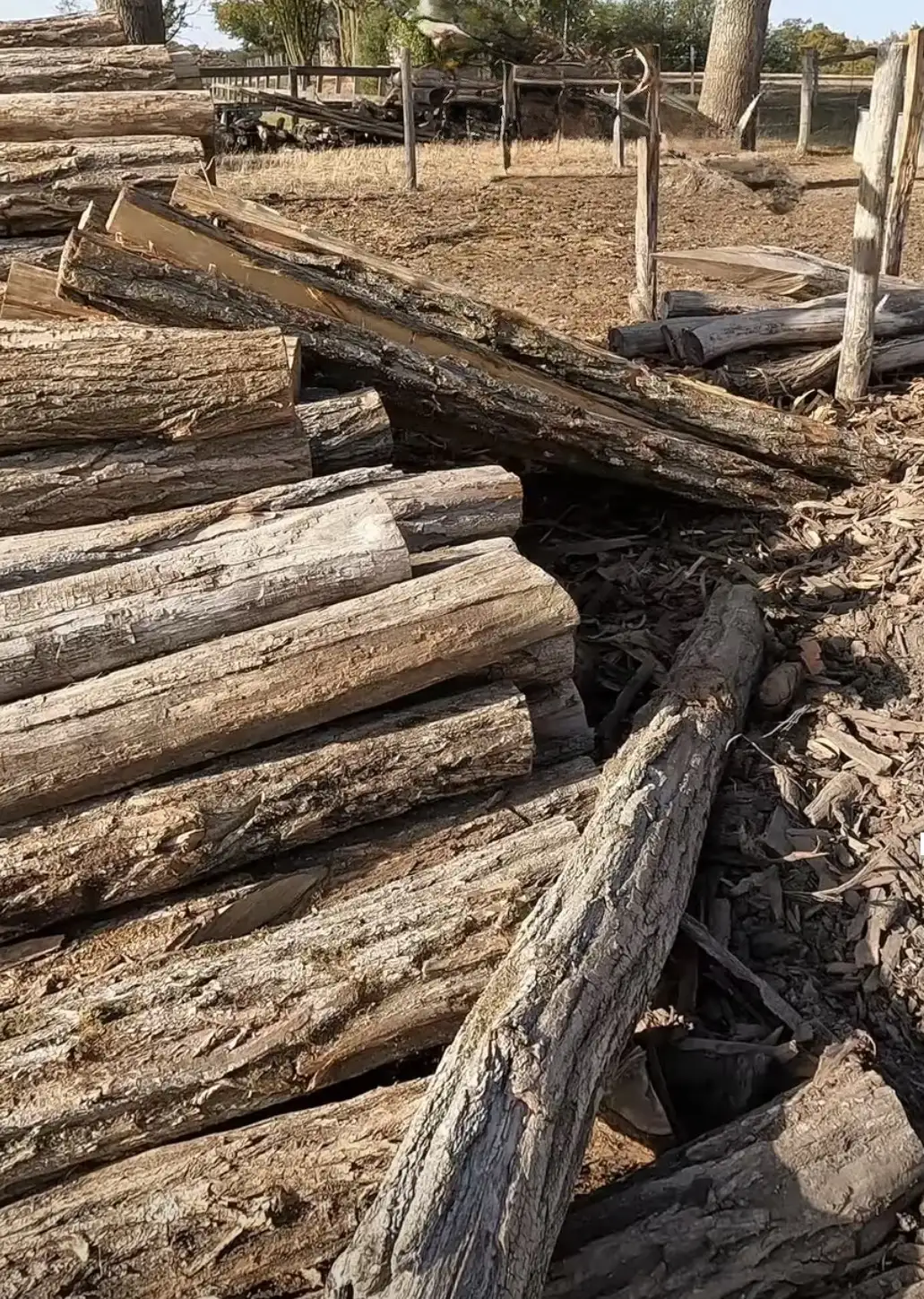
Black locust is one of the most decay-resistant hardwoods in North America. Its heartwood contains natural compounds that make it highly resistant to fungal decay and insect attack—including termites. Long before laboratories classified durability ratings, farmers already knew the truth through experience:
A black locust post in the ground would outlast nearly anything else.
While oak might soften and pine might rot within a decade, locust fence posts often stood for 40, 50, even 60 years in direct soil contact—without chemical treatment. For rural families depending on livestock containment, that kind of longevity mattered. Replacing fence lines was labor-intensive and expensive. A post that could remain stable for decades was not just a convenience—it was a necessity.
Black locust is also remarkably dense and strong. Its interlocked grain gives it both structural rigidity and shock resistance. That combination made it ideal for ship pegs along the coast and fence posts inland. It resisted splitting under pressure, yet could be split cleanly along its grain when shaped intentionally for rails. It became the practical choice, not because of marketing or design trends, but because it performed.
And when a tree can withstand decades underground without treatment, it only makes sense that it would define the fence lines of early America.
Before portable sawmills, pressure-treated lumber, or standardized dimensional boards, fencing had to be practical, efficient, and built with what the land provided. In much of early America—especially throughout the Appalachian Mountains—that material was black locust.
The split rail fence emerged not from design theory, but from necessity.
When settlers cleared land for farming, they were left with timber. Rather than hauling logs away, they put them to use. Straight-grained hardwoods like black locust could be cut to length and split along their natural grain using wedges and hand tools. No milling was required. The wood separated cleanly and predictably, following its internal structure.
This process created what we now recognize as the traditional split rail.
Unlike sawn lumber, split rails preserved the integrity of the wood fibers. Because the rails were separated along the grain rather than cut across it, their natural strength remained intact. This made them surprisingly durable for their simplicity.
The earliest and most recognizable form was the zig-zag “worm fence.” Instead of digging post holes, rails were stacked in interlocking angles, forming a self-supporting barrier. This was especially common in heavily forested regions where timber was abundant but labor was limited.
Over time, as farming practices evolved and land became more defined, post-and-rail systems became more common:
Black locust was the ideal candidate for this system. Its durability in ground contact meant posts could remain stable for decades. Its strength allowed rails to span distance without sagging. And because it required no chemical preservation, it remained a purely natural agricultural material.
Split rail fencing served multiple functions across rural America:
But beyond function, it began to shape the visual identity of rural America. From Pennsylvania to Kentucky, from Virginia to Ohio, split rail fencing became part of the landscape itself—woven into hillsides, lining dirt roads, framing barns.
It was not decorative fencing.
It was structural fencing built from necessity.
And yet, because it followed the natural grain and form of the wood, it carried a quiet beauty that machine-cut boards could never replicate.
That authenticity—strength drawn directly from the tree—is what continues to define black locust split rail fencing today.
To understand black locust split rail fencing, you have to understand the Appalachian Mountains.
Stretching from Alabama to New York, the Appalachian range is one of the oldest mountain systems in the world. Its rolling ridges, hardwood forests, and working farmland have shaped generations of American craftsmanship. This is not plantation forestry. It is a landscape of mixed hardwood stands, fence rows, pasture edges, and family-owned parcels where trees grow slowly and densely.
Black locust thrives here.
You’ll find it along reclaimed farmland, stabilizing hillsides, lining old property boundaries, and growing in the open sunlight where its straight grain can develop clean and strong. It is a tree that fits naturally into Appalachian ecology—tough, resilient, adaptable.
For generations, farmers in this region understood the value of black locust not from textbooks, but from experience. They watched posts remain solid while other species softened. They saw rails hold shape through seasons of freeze and thaw. They learned that when harvested thoughtfully, black locust offered both durability and renewal.
That tradition continues today.
Our split rail fencing begins in these Appalachian hardwood forests. The timber is locally sourced, selected for straight grain and structural integrity. We are not importing mass-produced material from overseas. We are working with native hardwood grown in the same region where split rail fencing first became common practice.
From forest to mill, the process remains grounded in craftsmanship.
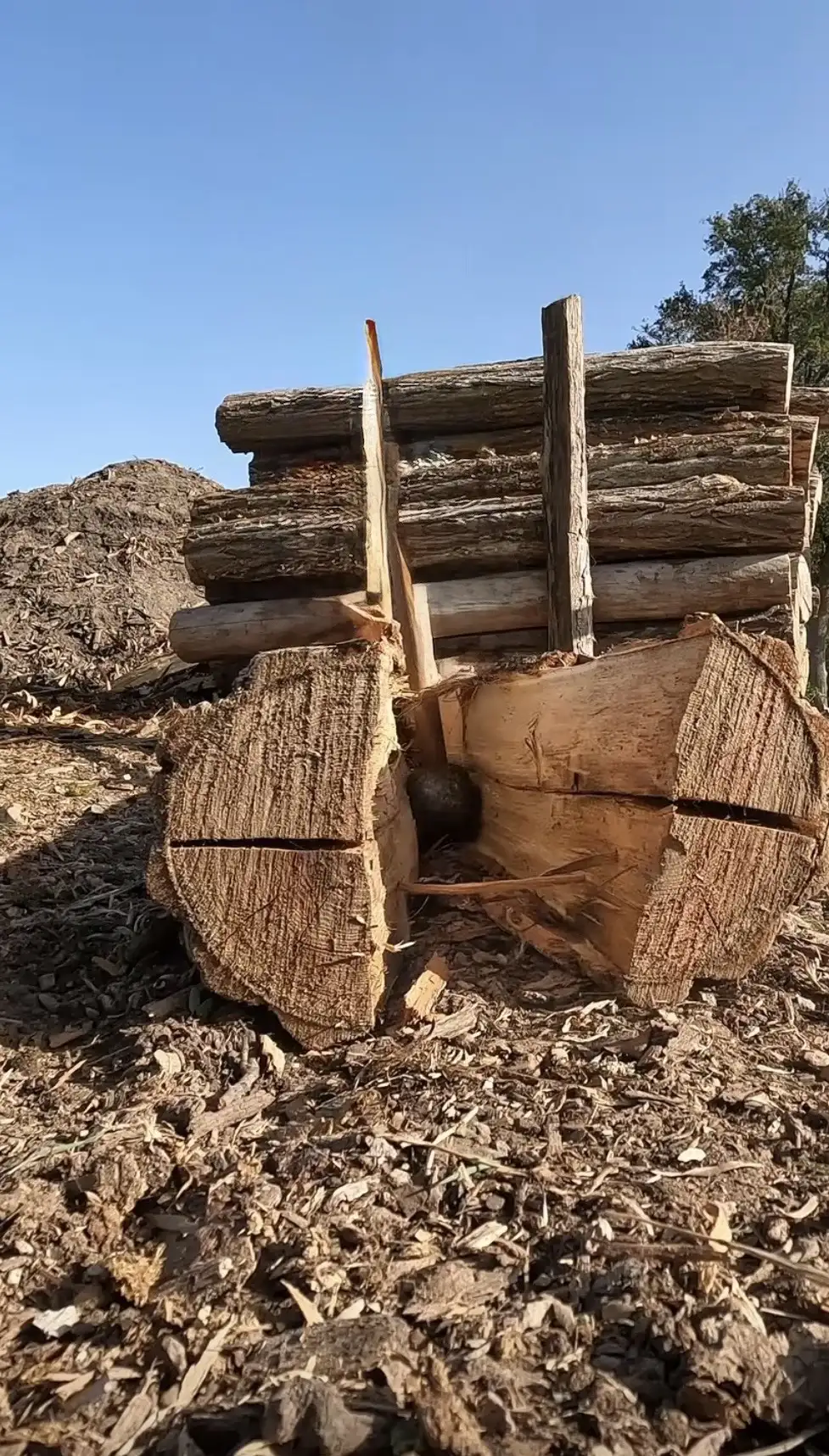
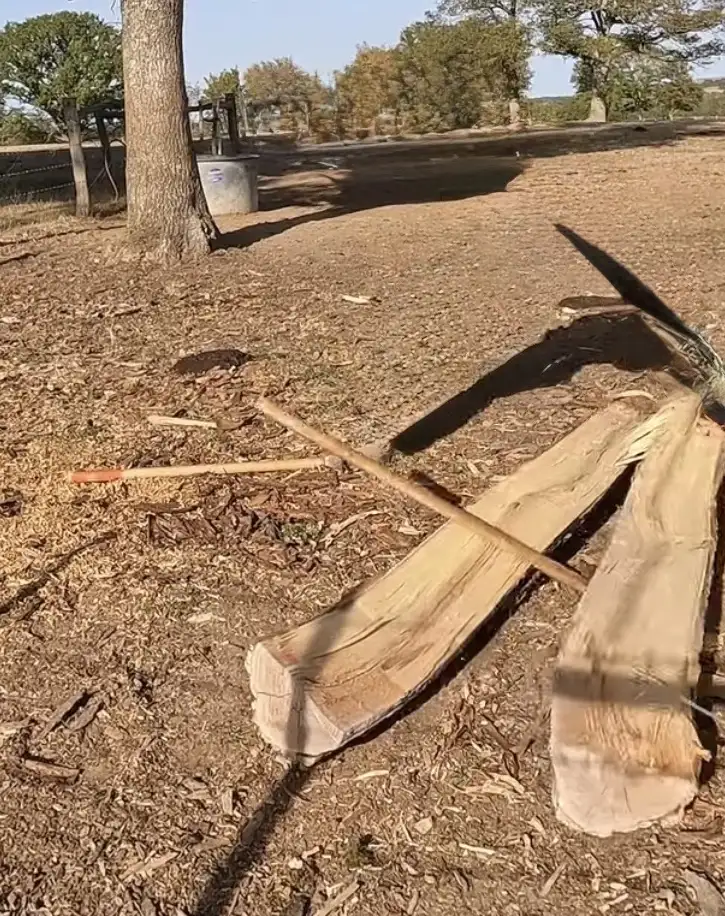
Logs are cut to length and then split by hand, following the natural grain of the wood. We use wedges and controlled force rather than industrial milling to shape the rails. Splitting preserves the strength of the fibers and creates the authentic texture that defines true split rail fencing.
Each rail carries the natural taper and character of the tree it came from. Each post reflects the density and resilience that made black locust legendary in ground contact applications.
In a world of high-speed sawmills and dimensional uniformity, hand-splitting might seem like a relic of the past.
But when it comes to black locust split rail fencing, the traditional method still matters — not for nostalgia, but for performance.
When a log is sawn into square boards, the blade cuts across wood fibers. While this produces clean, uniform lumber, it interrupts the natural grain structure. With split rail fencing, the goal is different. Instead of cutting through the grain, we follow it.
Each rail begins with a carefully selected black locust log — straight, dense, and structurally sound. The log is cut to length, then split by hand using wedges. The wood naturally separates along its internal grain lines, preserving the full strength of its fibers from end to end.
This matters for several reasons:
When wood is split along the grain, the fibers remain continuous. This increases tensile strength and reduces weak points along the rail. The result is a piece that resists cracking and holds up under long-term stress.
Hand-splitting creates the organic texture that defines authentic split rail fencing. Each rail carries subtle variations in taper, surface, and grain — not as defects, but as evidence of natural formation.
Unlike pressure-treated lumber, which relies on chemical infusion for durability, black locust requires no treatment. And unlike milled fence boards, split rails require minimal industrial processing. The strength comes directly from the tree.
This is how split rail fencing was originally produced. The method hasn’t changed because it doesn’t need to. The same principles that served farmers two centuries ago still apply.
At our mill, we maintain that tradition intentionally.
We don’t mass-produce split rails to resemble something rustic. We produce them the way they have always been produced in the Appalachian region — by selecting strong timber and splitting it by hand.
There is a reason black locust became the standard for fence posts across generations of farms.
It lasts.
Not because it is chemically treated.
Not because it is coated or sealed.
But because the wood itself is naturally engineered to resist decay.
Black locust is widely regarded as one of the most durable hardwoods native to North America. Its heartwood contains natural compounds that inhibit fungal growth and repel insects. These properties give it exceptional resistance in ground-contact applications — the very condition that causes most other woods to fail.
For fencing, that distinction matters.
Fence posts spend their lives buried in soil — exposed to moisture, microorganisms, freeze-thaw cycles, and mechanical stress. In these conditions:
Black locust, however, has historically demonstrated service lives of 40 to 60+ years in soil. In many rural areas, century-old locust posts can still be found standing along abandoned fence lines.
That level of performance changes the economics of fencing.
Instead of planning for replacement every decade, landowners install black locust once and expect it to endure. There is no chemical leaching. No periodic retreatment. No reliance on pressure-treated lumber infused with preservatives.
Our split rail fencing begins in the Appalachian region, where black locust has long been part of working farmland and mixed hardwood stands. We source locally, selecting straight-grained logs with the density and structure required for long-term ground contact performance.
Once logs arrive at our mill, the process reflects the same principles that defined traditional split rail production:
Each log is evaluated for grain orientation, straightness, and structural integrity. Because the rails will be split rather than sawn into dimensional boards, grain quality is critical.
Logs are bucked to their intended rail or post lengths before splitting begins. We produce:
These lengths allow flexibility in fence layout, spacing, and property design.
Using wedges and controlled force, each log section is split along its natural grain. This preserves fiber continuity and produces rails with authentic taper and texture. No artificial shaping. No cosmetic distressing. Just the natural form of the wood revealed.
Posts are shaped and mortised to accept rails cleanly and securely. We offer:
Both are designed for structural reliability and proper rail fit, depending on fence height and configuration requirements.
Because black locust performs exceptionally well in direct soil contact, posts require no chemical treatment. The durability is inherent to the wood itself.
While the rails retain their natural character, we maintain consistency in:
This balance — natural form with structural precision — ensures that installation is straightforward while preserving the authenticity of split rail fencing.
Every rail and post reflects two things:
We are not replicating a rustic aesthetic through mass production. We are continuing a regional method of fencing that has been used for generations — refined with modern quality standards, but rooted in traditional technique.
Black locust split rail fencing has endured for a simple reason: it works.
From early shipbuilders along the Atlantic coast to Appalachian farmers setting fence lines across rolling pasture, black locust proved itself not through marketing claims, but through performance. It resisted rot where other woods failed. It held ground where moisture, insects, and time tested every material placed in the soil.
That legacy continues today.
In an era of synthetic fencing systems and chemically treated lumber, black locust remains what it has always been — a naturally durable hardwood capable of decades of service without artificial preservation. It does not rely on coatings. It does not depend on pressure treatment. Its strength and longevity are inherent.
A black locust split rail fence can last 40 to 60+ years, even in direct ground contact. Black locust is one of the most rot-resistant hardwoods in North America, naturally resistant to fungal decay and insects without chemical treatment. Proper installation and soil conditions can extend its lifespan even further.
No. Black locust does not require pressure treatment. Its heartwood contains natural compounds that make it highly resistant to rot and insect damage. This makes it ideal for fence posts and rails that are set directly into the ground without chemical preservatives.
In terms of natural durability and lifespan, black locust often outperforms pressure-treated pine. While treated pine relies on chemical preservatives to resist decay, black locust achieves similar or superior performance naturally. It also eliminates concerns about chemical leaching into soil.
Black locust split rail fencing is typically available in 8-foot and 11-foot rails, along with 2-hole and 3-hole line posts. Exact dimensions, minimum circumference, and pricing may vary depending on the supplier and regional production standards.
Black locust has been used for split rail fencing for centuries because of its exceptional strength, ground-contact durability, and resistance to decay. Early American farmers discovered that black locust posts could remain solid in the soil for decades, making it one of the most reliable native hardwoods for agricultural fencing.
Continue Reading
How Long Does a Wood Deck Last? 10 to 50 Years, by Species

The Best Wood for Decks: A Guide to Outdoor Decking

Outdoor Flooring Options Compared by Cost and Lifespan
The Domestic Teak Alternative for Decking: Black Locust