Woods like teak, oak, cedar and pine are common options. But have you heard of this great alternative to these common types called black locust? If you haven’t, then it needs your attention.
Black Locust Lumber provides highly durable and sustainable wood. For generations, projects made using this wood maintain their strength and longevity. From residential decks and custom furniture to commercial fencing, black locust wood offers unique benefits.
Black Locust Wood Features
Found commonly in North America, black locust has many features that make it a great choice:
- It is a very dense wood; in fact, it's harder than oak
- It offers great durability
- It has more strength than some exotic hardwoods
- It contains robinin, which makes it highly resistant to rot, decay and insect damage
- When freshly cut, the wood has a beautiful golden-brown to greenish-yellow color, great for decorative purposes
- When aged, it gets a rich honey or dark brown color
- It has a straight grain
- The texture is medium to coarse
- It is naturally beautiful and blends well with different designs
- It is suitable for applications where it touches the ground.
- It does demand chemical treatment
- Black locust trees grow incredibly fast, making them a renewable resource.
Such a huge list of desirable features makes it a great option to consider for home and commercial wood projects.
Do Black Locust Trees Have Thorns?
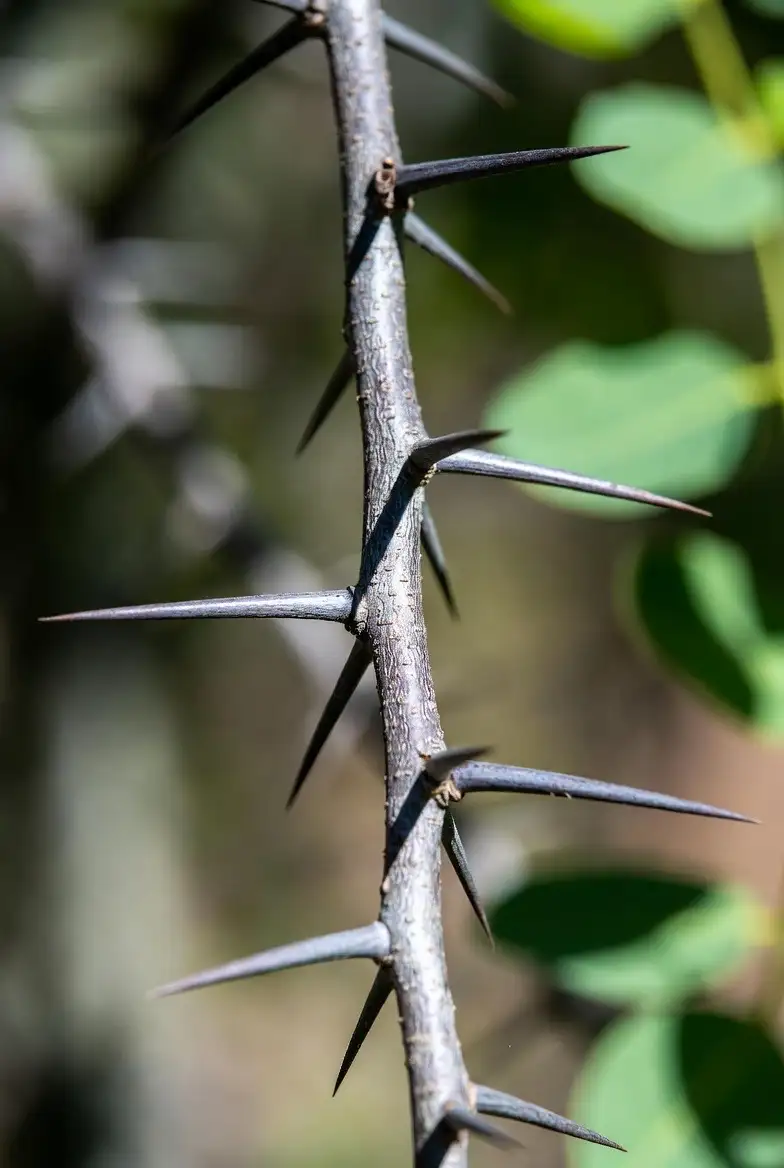
This is a commonly asked question for black locust. Often, users and harvesters ask, “Does black locust tree have thorns?” They must know what kind of wood it is when working with the trees or harvesting the wood. Black locusts do have thorns. When leaves grow, the stems grow in pairs at the base. These get modified as thorns, as these are quite sharp. However, you will not find thorns in the processed lumber. Once the tree is shaped into boards or beams, the thorns are completely removed. If you are planning to harvest black locust, you will need safety gear for careful handling.
When harvesting or using black locust for your wood projects, you must remember:
- Black locust trees have thorns, but these are removed during processing.
- Young trees have sharp thorns that need careful handling
- It is its natural defence mechanism against animals.
- As the trees mature, the thorns may become less noticeable.
- The thorns are rigid and sharp; they don’t break easily.
- Safety gear is needed for processing black locust.
When landscaping, planting black locust near walkways and play areas must be avoided. However, for timber production, the thorns won’t be an issue.
Does Black Locust Tree Have Thorns Throughout Its Life?
The answer is – yes, black locust trees will have thorns throughout their life. As these trees age, their thorns may change. During growth, young saplings have sharp thorns. As the tree matures, the trunks develop thick bark that covers the thorns. Thus, the thorns get deeply embedded in thick bark. These are removed during processing, when the tree is prepared for the commercial lumber. If you are harvesting black locust trees, you should be aware of the thorns. During maintenance and pruning, proper handling is required. But thorns don't impact the quality or usability of the wood.
Working with Black Locust Wood
Black locust offers tremendous benefits. But when working with it or choosing it for your project, you should know more about its characteristics:
Hardness - Black locust has a very high density level. This durability makes it challenging to work with hand tools. Power tools and sharp blades are required for processing.
Weight - Black locust is a highly dense and heavy wood. It demands more labor-intensive handling. The installation work is rigorous as well.
Availability - Black locust’s availability is less than that of pine or oak. Though it grows fast, it needs to be sourced from specialty mills.
Cost - Black locust wood is a bit costlier than other standard options. Its price is justified by its longevity and low maintenance needs.
Finishing - The wood weathers naturally. It develops a beautiful silver-gray patina as it ages. It accepts stains and finishes well.
Maintenance - Black locust lasts much longer without chemicals. It requires negligible maintenance. It is harder and more resistant to damage. The wood can be used for outdoor applications and left with no treatment.
The question- does black locust have thorns often bothers users. When they research black locust wood as an option for their wood project, they discover that this wood has natural thorns. But these thorns never cause an issue after processing. Black locust lumber, when processed, comes with no thorns. These have a flat surface and can be used in any wood project. These offer several benefits of use. The wood may be more expensive than other common options, but its durability makes it a great option for projects like:
- Outdoor decking and patios
- Fencing and posts
- Commercial outdoor furniture
- Flooring
- Structural timber
Beyond these standard projects, black locust can also be used for special applications like constructing boats, playground equipment, tool handles, turned bowls and other woodcraft projects. Musical instruments can also be constructed using this wood.
You can try different types of finishing on the wood. Applying a UV-protective oil finish annually or biannually preserves its original strength and look. With proper professional installation and minimal care, black locust structures can last up to 50 to 75 years.
Conclusion
When searching for a durable, low-maintenance and naturally beautiful wood, black locust wood deserves consideration. For both residential and commercial projects, it is a great choice. Its hardness and rot resistance make it ideal for outdoor decking and fencing. Commercial furniture and flooring made from black locust can last for decades. Black locust trees have thorns that require careful handling. These thorns are completely removed during processing. You get a smooth, workable lumber. The wood requires sharp tools due to its high strength. Builders, designers and property owners must consider this as a reliable option.
Black Locust Lumber provides custom black locust solutions and products. They serve both residential and commercial project needs.
Frequently Asked Questions
Is black locust safe to plant around children's parks and busy areas?
Black locust saplings have thorns. These should not be planted in areas with high human traffic. The processed lumber, though, is completely safe and thorn-free.
Does black locust wood survive in extreme weather conditions?
Black locust performs exceptionally well in all weather extremes. It can resist moisture in wet climates. It doesn't crack in dry conditions. It works well in both hot and cold temperatures.
Can I use black locust wood for projects that involve ground contact?
Yes, black locust is one of the best woods for ground contact applications. It naturally resists decay and can last up to 100 years in soil without chemical treatment.
Does black locust wood need to be treated or sealed for outdoor use?
No treatment is necessary for black locust. It naturally resists rot and insects without chemicals. Sealing is optional for aesthetic purposes.